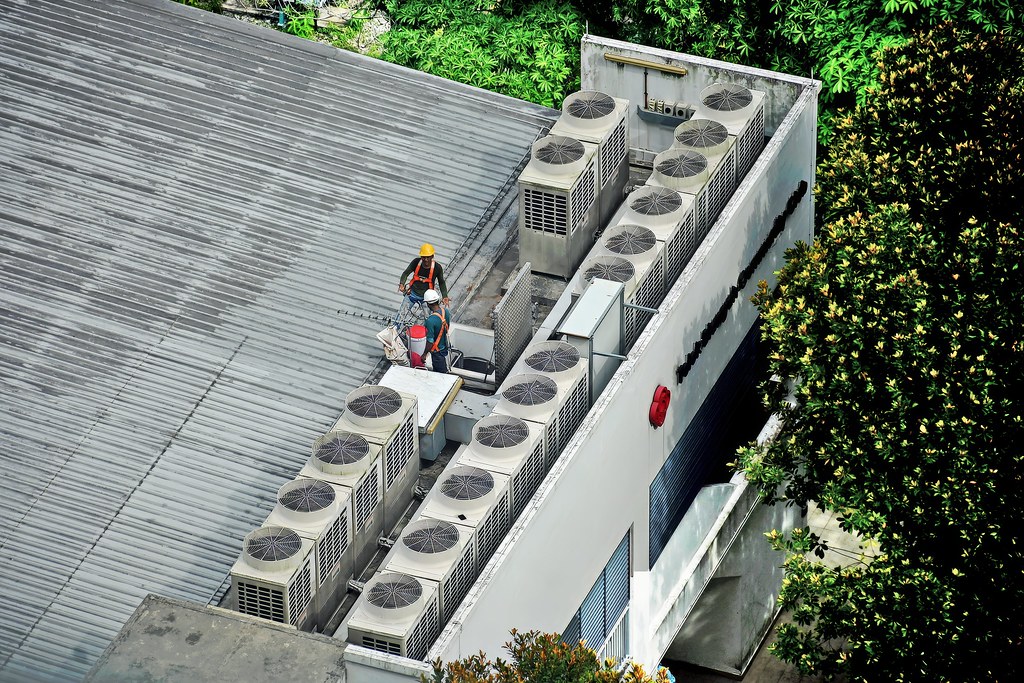
Your outdoor AC unit rides out every storm in the open. As a company that does both storm restoration and HVAC across Tampa Bay, we see the same preventable damage after every named storm. Here's the before-and-after checklist that saves systems.
Before the storm
- Cool the house down early, then shut the system OFF at the thermostat AND the breaker before conditions arrive. A power surge through a running compressor is a common storm casualty — and surges love the moments around outages.
- Clear the launch pad: patio furniture, potted plants, and grill parts become missiles that bend coil fins and fan blades. Anything loose within 30 feet, bring in.
- Do NOT wrap the unit in a tarp and leave it — trapped moisture and shredded plastic cause more trouble than rain, which the unit is built for. A fitted, vented cover secured properly is fine for debris; garbage bags and bungees are not.
- Photograph your equipment from a few angles. If a claim happens, dated 'before' photos are gold.
- In surge/flood-prone areas, know your unit's height. If it sits on a ground pad in a flood zone, this storm season's best upgrade is an elevated stand (see below).
The elevated-stand upgrade
Storm surge and pooling rain are what actually total condensers — a unit that takes water over its electrical components is usually done. Florida code already requires elevating equipment in flood zones for new installs, and retrofitting an elevated stand is a modest project that has saved more than one of our customers a full system after a surge event. If your unit sits low in a flood-prone yard, ask us about it before the season peaks.
After the storm — the restart that kills compressors
- Look before you power: standing water at the unit, visible debris in the fan, bent lines, or a shifted pad = leave the breaker off and get an inspection first.
- If the unit took flood water, do not energize it. Period. Water in the controls and compressor turns a survivable event into a replacement.
- Wait for stable power: the flickery hours after restoration are surge city. Give the grid a beat before bringing the AC back.
- Restart sequence: breaker on, wait a few minutes (modern compressors need their crankcase heaters and pressure to settle), then thermostat to cool.
- Weird noises or breaker trips on restart? Shut it down and call — running through symptoms causes the expensive damage.
If a storm does get your system, we handle both sides: honest assessment of repair versus replacement, and the insurance documentation from a contractor who works claims every season.
Storm damage to your AC or roof? One call covers both — and we work with your insurance.