
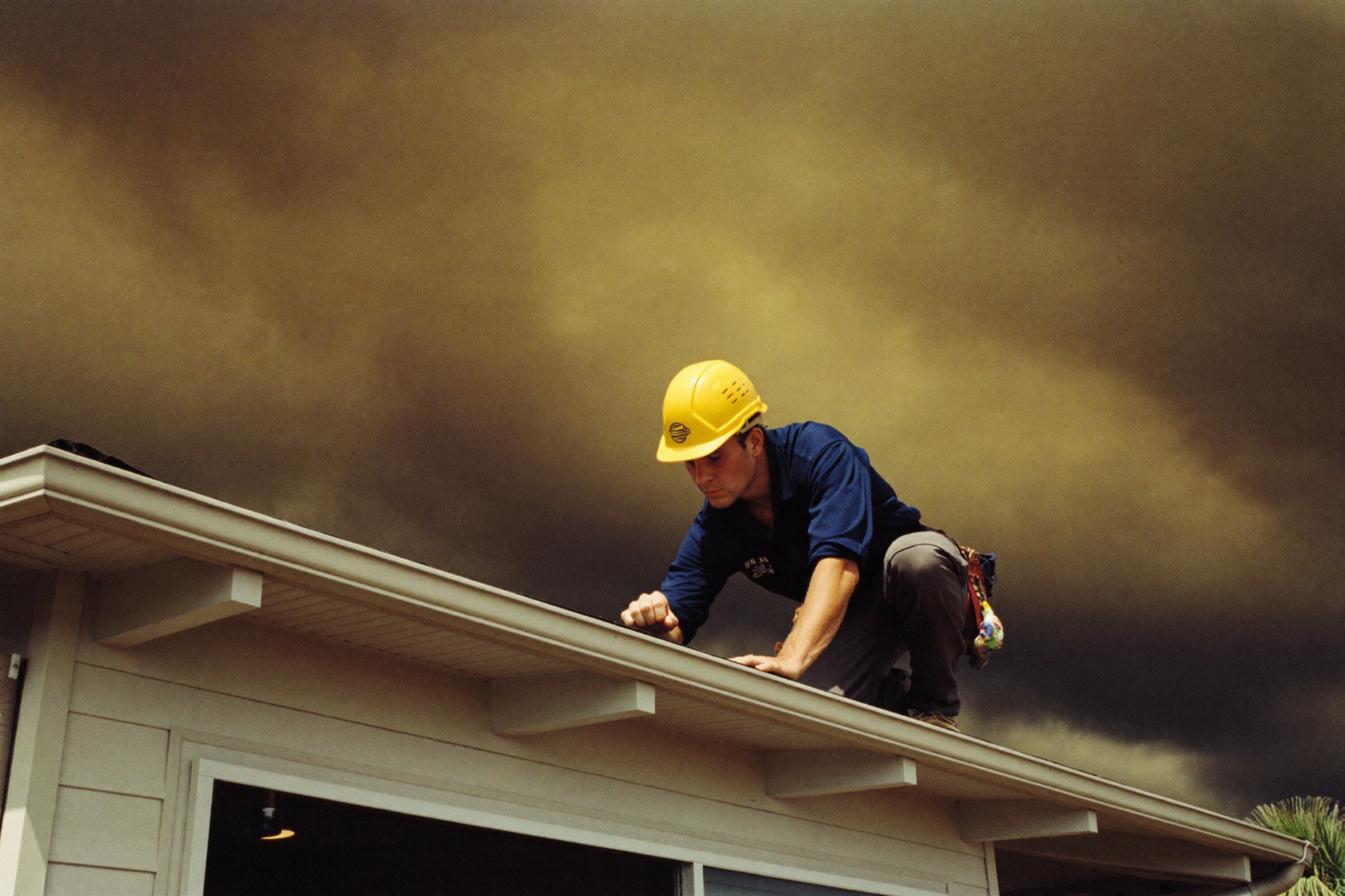
After storm damage, the clock starts twice: water is finding its way into your decking and drywall, and your insurance policy's 'duty to mitigate' clause expects you to stop it. Tarping is how both clocks get paused.
Why insurers care about your tarp
Nearly every homeowner policy requires reasonable steps to prevent further damage after a loss. Interior damage that spreads because an open roof sat exposed for two weeks can be contested — while the reasonable cost of emergency tarping is itself typically a covered expense. Save the receipt; it belongs in the claim.
What professional tarping looks like
- ▸Heavy-duty (not hardware-store painter's plastic) tarp extending past the damage and over the ridge, so water can't run underneath the top edge.
- ▸Secured with furring strips screwed through the tarp edges — not bricks, not sandbags, which become projectiles in the next gust.
- ▸Documented: photos of the damage BEFORE covering it, because the adjuster needs to see what the tarp now hides.
- ▸Typical professional cost runs a few hundred dollars to around a thousand depending on size and pitch — again, usually claimable.
The DIY reality check
A wet, damaged roof after a storm is one of the most dangerous places a homeowner can stand, and falls hurt more people after hurricanes than the storms do. If you must act before help arrives, work from inside the attic catching water, or from a ladder at the eave — not walking the field of a compromised roof.
Tarp is a pause button, not a fix
Even well-installed tarps are rated in weeks-to-months, not seasons — UV eats them and wind works the edges. The sequence that protects you: tarp fast, document everything, file the claim, then permanent repairs by a licensed local contractor who'll meet your adjuster.
Storm damage right now? We do emergency tarping and full restoration across Tampa Bay — one call, documented for your claim.