
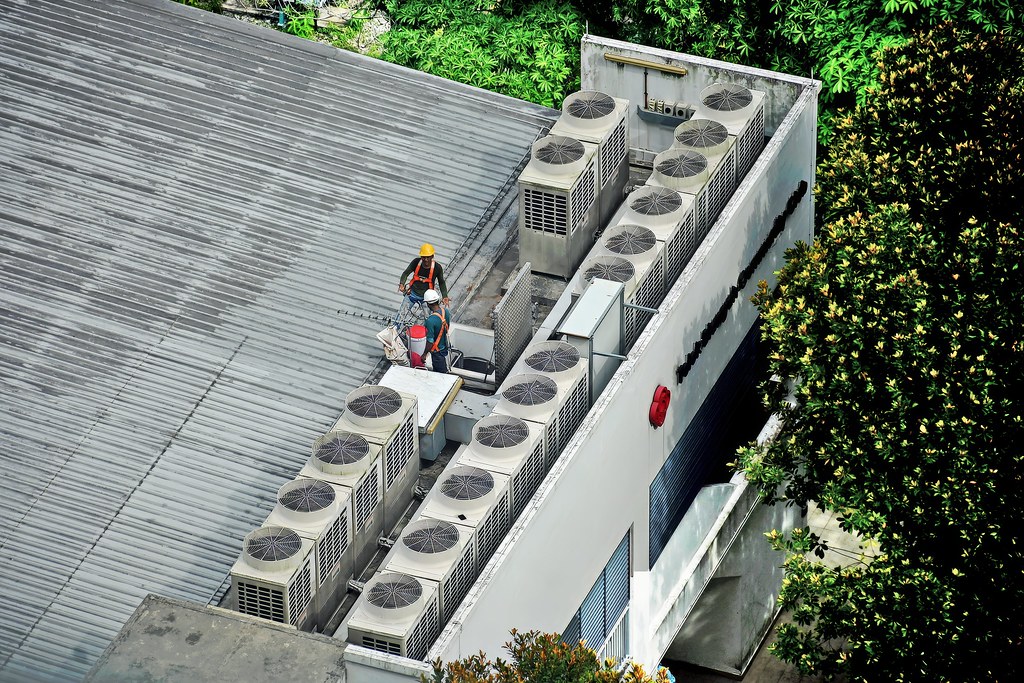
'What size AC do I need?' deserves two answers: the rough range that helps you sanity-check quotes, and the honest explanation of why the final number should come from math, not a chart.
The Florida rough guide
- ▸Under 1,200 sq ft → usually 1.5-2 tons
- ▸1,200-1,500 sq ft → 2-2.5 tons
- ▸1,500-2,000 sq ft → 2.5-3 tons
- ▸2,000-2,400 sq ft → 3-3.5 tons
- ▸2,400-2,800 sq ft → 3.5-4 tons
- ▸2,800+ sq ft → 4-5 tons
One 'ton' is 12,000 BTU per hour of cooling — nothing to do with weight. And the ranges above swing a full size in either direction based on the house itself.
What moves the real number
- ▸Ceiling height, window area and orientation (west glass is a heat cannon here), insulation, and attic condition.
- ▸Ductwork location — attic ducts in Florida add real load.
- ▸Shade, sun exposure, and how leaky the envelope is.
- ▸Occupancy and heat-generating appliances.
The two expensive mistakes
Undersized: runs endlessly, never quite catches up on the worst days. Rarer, because everyone fears it. Oversized: the actually-common one — cools fast, shuts off before dehumidifying, leaves the house cold-and-clammy, short-cycles itself to an early death. 'When in doubt go bigger' is the most costly folk wisdom in Florida HVAC.
Manual J: the 20 minutes that gets it right
A Manual J load calculation models YOUR house — orientation, glass, insulation, ducts — and outputs the load the system should match. It's the difference between installing equipment and engineering comfort. We run one before every install; 'same size as the old unit' is not a sizing method, especially when the old unit was guessed too.
Get tiered pricing sized to your home's square footage in 60 seconds — then Manual J confirms before install.